

Garlic is often hailed as the superhero of the kitchen, packing a punch of flavor and health benefits. But what happens when this culinary champion turns into a villain? Spoiler alert: nobody wants to bite into a clove that’s gone bad. Knowing how to identify spoiled garlic can save you from a culinary catastrophe and keep your dishes delicious.
Signs of Bad Garlic
Recognizing bad garlic helps maintain the quality of dishes. Several characteristics indicate that garlic has spoiled.
Appearance
Fresh garlic features a firm, unblemished skin. Discoloration, such as green sprouts or dark spots, signals spoilage. Mold growth appears as fuzzy patches on the exterior. Softness or shriveling of cloves indicates that garlic has lost its freshness. Cloves that appear dry or shriveled exhibit compromised quality. A bulb that looks wrinkled shows it is past its prime.
Texture
Garlic should feel firm and compact when fresh. Soft cloves indicate deterioration. Cloves that feel mushy are often a sign of spoilage. A slimy texture suggests bacterial growth, making the garlic unsafe to consume. Halos of moisture around the cloves may also suggest they are no longer good. An intact, crisp feel indicates the garlic is still fresh.
Smell
Fresh garlic emits a strong, pungent aroma. An off odor, often sour or musty, signals that the garlic has gone bad. Garlic that smells different from the familiar scent should be discarded immediately. If the smell is faint or absent, it suggests a loss of flavor and freshness. A harsh or rancid odor indicates spoilage and potential safety concerns. Evaluating the scent is crucial in determining garlic’s edibility.
Storage Tips for Garlic
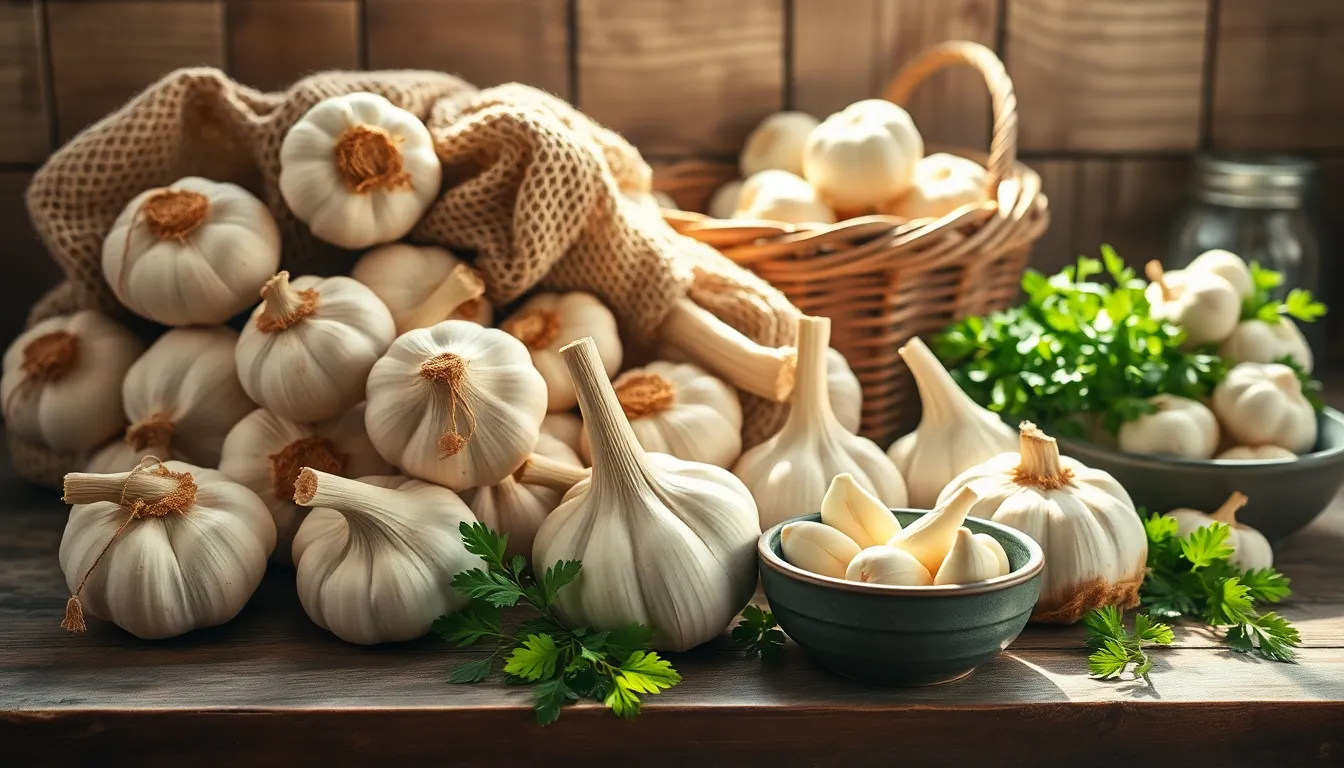
Storing garlic correctly prolongs its freshness and prevents spoilage. Knowing how to handle garlic ensures it’s always ready for cooking.
Proper Storage Techniques
Choose a cool, dark place for garlic storage. Avoid sealing garlic in plastic bags, as moisture can lead to mold. Instead, use a mesh bag or a basket that allows airflow. Store whole bulbs intact until use for maximum longevity. Once a bulb is broken, use individual cloves within ten days. Avoid refrigeration for whole bulbs, as it can sprout roots.
Optimal Conditions
Aim for a temperature range of 60°F to 65°F for optimal garlic storage. Humidity levels should remain low to prevent moisture buildup. Light exposure should be minimal, as bright light can lead to sprouting. Keeping garlic away from onions prevents ethylene gas interference, which may accelerate spoilage. These conditions preserve garlic quality and extend its shelf life significantly.
How to Extend Garlic’s Shelf Life
Prolonging garlic’s shelf life involves effective storage techniques. Proper methods make a significant difference in maintaining its freshness and flavor.
Best Practices
Store garlic in a cool, dark environment. An ideal location has a temperature between 60°F and 65°F. Additionally, using a mesh bag or basket ensures adequate airflow. Keeping whole bulbs intact until needed promotes longevity. Once a bulb is broken, individual cloves should be used within ten days. Low humidity and minimal light are crucial for preventing sprouting. Separating garlic from onions is also important, as onions emit ethylene gas that accelerates spoilage.
What to Avoid
Avoid storing garlic in plastic bags, which trap moisture and promote mold growth. Exposure to light can lead to sprouting, so keeping garlic in opaque containers is essential. Never refrigerate garlic, since excess moisture in fridges encourages decay. Placing garlic near strong-smelling foods can alter its flavor, so it’s best to keep it in a separate area. Lastly, resisting the urge to wash garlic before storage helps prevent moisture retention.
When to Discard Garlic
Signs of bad garlic include visible discoloration and mold. Cloves should maintain a firm texture; any softness or sliminess indicates spoilage. An off or faint odor differs from the usual strong aroma, signaling that garlic is no longer fresh.
Garlic that appears shriveled should also be discarded. Shriveling often occurs when garlic loses moisture, leading to loss of flavor. If individual cloves have developed dark spots, it’s essential to throw them away since these indicate decay.
Store-bought garlic typically has a shelf life of several weeks. However, once signs of spoilage appear, it’s crucial to act quickly. Garlic bulbs with excessive sprouting are also not suitable for consumption, as sprouted garlic tends to taste bitter.
Always check your garlic regularly. Inspecting it for any signs of deterioration helps maintain the quality of dishes. Noticing any of the above signs means it’s time to part ways with the garlic, ensuring culinary creations do not suffer from spoiled ingredients.
Keep in mind that high humidity levels can accelerate spoilage. If garlic has been stored inappropriately, such as in plastic bags, its quality deteriorates even faster. When in doubt, it’s best to err on the side of caution and discard questionable garlic.
By assessing garlic for these characteristics, maintaining flavor in cooking becomes much easier.
Recognizing the signs of bad garlic is essential for any cook. By knowing what to look for—like discoloration, softness, or an off smell—it’s possible to avoid culinary mishaps. Proper storage techniques also play a significant role in extending garlic’s shelf life. Keeping garlic in a cool, dark place and using breathable storage solutions can help maintain its freshness. Regularly inspecting garlic for spoilage ensures that each dish remains flavorful and aromatic. When in doubt, it’s always safer to discard questionable garlic to preserve the quality of meals. With these tips in mind, anyone can confidently use garlic in their cooking without the fear of using spoiled ingredients.


